
Dental crown vs onlay: when each restoration makes sense
When a tooth has more damage than a filling can address but is not failing outright, the next decision often comes down to two restorations: a full-coverage crown or a partial-coverage onlay. Both are durable, both are routine in restorative dentistry, and both can serve a tooth for many years. The choice depends on how much healthy tooth structure remains, where the damage sits, and what the patient and clinical team agree is the best long-term plan.
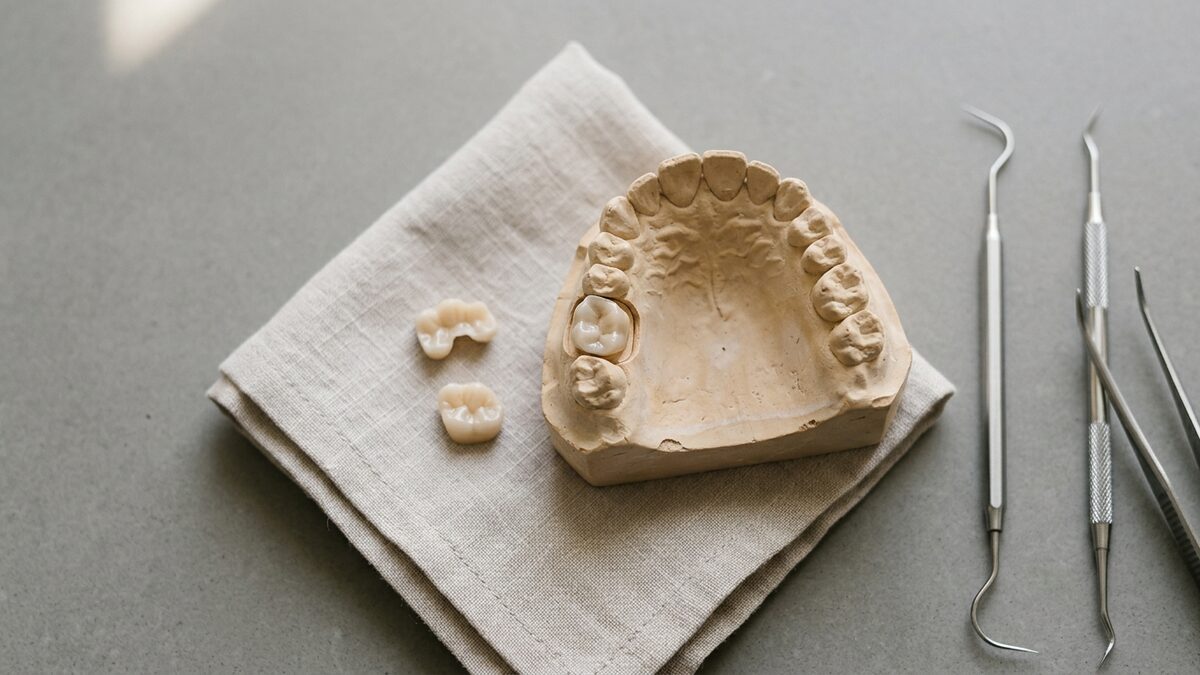
A dental crown covers the entire visible portion of a tooth above the gumline. The clinical team reduces the outer surfaces of the tooth, takes a digital or physical impression, and bonds a custom-made cap over what remains. An onlay is more conservative. It covers one or more cusps (the raised points on a back tooth) and a portion of the chewing surface, but it preserves the healthy walls of the tooth that do not need reinforcement. In practical terms, a crown wraps the tooth; an onlay patches the part that is broken or worn while leaving the rest alone.
The single most important factor in choosing between the two is how much sound tooth structure remains. When a tooth has a large old filling that has failed, a fracture line running across the chewing surface, or a cusp that has broken off, providers measure what is left. If the remaining walls are thin, undermined, or cracked, a crown distributes biting forces across the entire tooth and protects against further fracture. If the damage is localized and the surrounding walls are still thick and intact, an onlay can address the problem without sacrificing the healthy enamel and dentin that are doing their job.
Preservation of natural tooth structure matters because every restoration has a lifespan. A tooth that has been crowned can be re-crowned, but each subsequent restoration removes a little more tissue and brings the work closer to the nerve. Patients who choose an onlay when the situation allows it are essentially saving a step for later. If the onlay eventually fails or new damage appears, a crown remains a viable next option. The reverse is not possible; once a tooth has been prepared for a crown, an onlay is no longer a reasonable plan.
Material options and what they mean for longevity
Both crowns and onlays are available in several materials, and the choice depends on the tooth's location, the patient's bite, and aesthetic preferences. Lithium disilicate and zirconia are common ceramic options. Lithium disilicate offers a balance of strength and translucency that works well on premolars and visible areas. Zirconia is stronger and is often selected for molars or for patients who grind their teeth. Gold alloys are still used in some cases, particularly for second molars where the appearance is less of a concern and longevity is the priority. Composite onlays exist as well and can be a reasonable interim choice, though they generally do not last as long as ceramic or metal options.
Longevity expectations vary, but well-placed crowns and onlays in ceramic or metal commonly last ten to fifteen years or longer when home care and routine professional visits are consistent. The factors that shorten that range tend to be the same for both restorations: untreated grinding habits, gum disease at the margin, recurrent decay where the restoration meets the tooth, and trauma. Patients who clench or grind are typically asked about a nightguard, since the forces generated during sleep can fracture even strong materials over time.
The visit itself is similar for both restorations. After the tooth is anesthetized, the clinical team removes the damaged tissue and any old restorative material, shapes the prep, and takes an impression. A temporary is placed while the final piece is fabricated, either in an outside lab or chairside if the office uses same-day milling. At the seat appointment, the temporary is removed, the final restoration is tried in, and once the fit and bite are confirmed, it is bonded or cemented in place. Sensitivity for a few days after seating is common and usually resolves on its own.
When discussing the treatment plan, patients can ask their provider a few specific questions: How much healthy tooth structure will remain after preparation for each option? Is there a crack visible on imaging or under magnification that would change the recommendation? What material is being proposed and why? What is the expected lifespan given the tooth's position and the patient's bite? These questions help frame the conversation as a shared decision rather than a one-sided recommendation, and they often surface details that affect long-term outcomes.
This article is informational and is not medical or dental advice. Treatment options should always be made in consultation with a qualified dentist.