
Night Guards for Teeth Grinding: Signs You May Need One
Many people grind or clench their teeth during sleep without realizing it, and the first evidence often turns up during a routine dental visit rather than in the moment it happens. Understanding the signs of bruxism, and how a night guard fits into a care plan, can help patients raise the topic early and know what to expect.
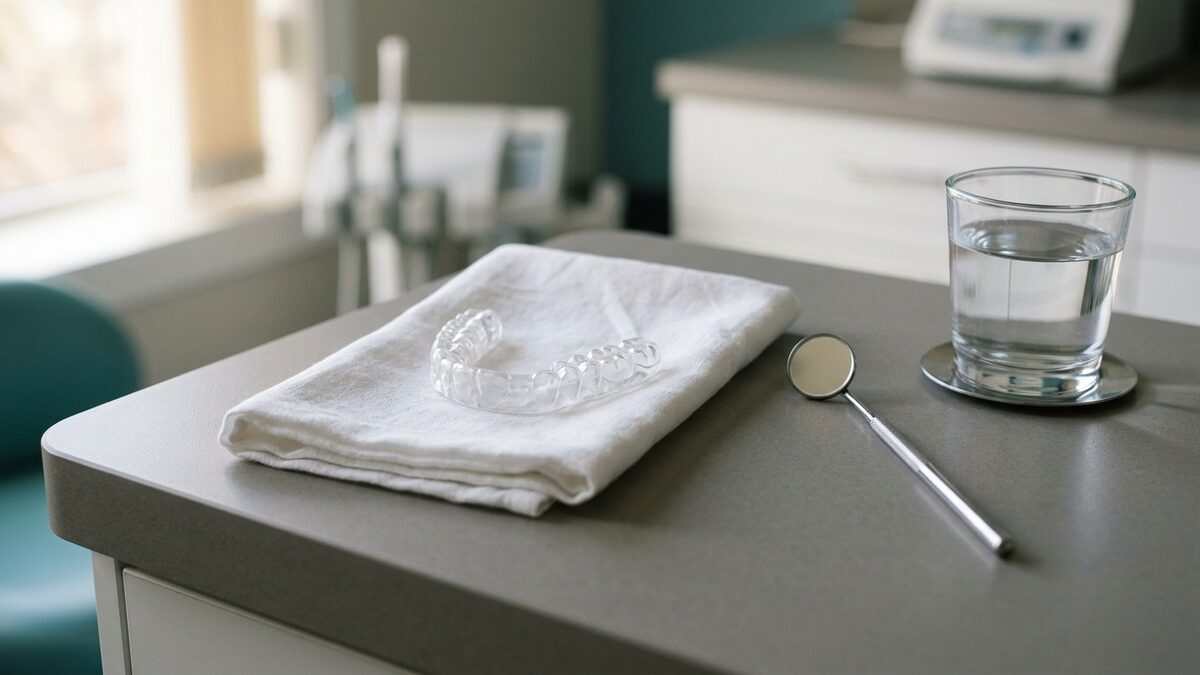
Bruxism is the clinical term for grinding or clenching the teeth, and it commonly occurs at night when a person has no conscious control over the movement. Because it happens during sleep, patients frequently learn about it secondhand: a partner notices the sound, or a dental team spots the physical traces during an exam. Neither situation is a cause for alarm, but both are worth paying attention to, since sustained grinding places repeated pressure on the teeth, the jaw joints, and the surrounding muscles.
The purpose of this guide is to describe how nighttime grinding is typically identified, which symptoms tend to point toward it, and how the two broad categories of night guards differ. It is meant to help patients prepare for a conversation with their dentist, not to replace that conversation.
How Nighttime Grinding Shows Up During a Dental Exam
Providers often recognize bruxism through wear patterns before a patient ever mentions a symptom. Grinding gradually flattens the biting surfaces of the teeth, and over time this can produce small chips, shortened edges, or a polished, glassy appearance on areas that would normally show more texture. In some cases the enamel wears unevenly, which changes how the upper and lower teeth meet.
A dental team may also look for related signs during a routine visit. These can include:
- Tooth sensitivity that appears when enamel thins and the underlying layer becomes more exposed
- Small fracture lines or hairline cracks in the enamel
- Tenderness in the jaw muscles or the joints located just in front of the ears
- Indentations along the sides of the tongue or a ridge of tissue along the inside of the cheeks
- Gum recession or worn fillings in specific spots that absorb concentrated force
Patients themselves often notice a different set of clues. A dull headache centered near the temples in the morning, a sore or tired jaw shortly after waking, or a clicking sensation when opening the mouth can all accompany nighttime grinding. Disrupted sleep, either the patient's own or a partner's, is another common thread. None of these symptoms confirms bruxism on its own, which is why providers weigh them alongside the physical findings from an exam.
When grinding is suspected, the clinical team typically reviews the pattern of wear, asks about sleep and stress, and considers whether the bite itself is contributing. Documenting the current condition of the teeth also gives a baseline, so that any future change can be compared against it. This is one reason regular checkups matter: subtle wear is far easier to catch when the same providers can track it visit over visit.
Comparing Over-the-Counter and Custom-Fitted Night Guards
A night guard is a protective appliance worn over the teeth during sleep. Its job is to place a cushioning layer between the upper and lower teeth so that grinding force is absorbed by the guard rather than the enamel. Guards fall into two general categories, and the difference between them is mostly about fit and durability.
Over-the-counter guards are available without a dental visit. Many use a boil-and-bite design, where the material is softened in hot water and then pressed against the teeth to form a rough impression. These options are less expensive and easy to obtain, which makes them appealing as a short-term measure. The trade-offs are that they tend to be bulkier, fit less precisely, and wear out faster. A loose or ill-fitting guard can feel uncomfortable enough that a person stops wearing it, which limits any benefit.
Custom-fitted guards are made from an impression or digital scan of a patient's own teeth, then fabricated to match that specific shape. Because they are built to the individual bite, they generally fit more securely, feel less intrusive, and hold up longer under repeated pressure. A dentist can also adjust the thickness and material depending on how heavily a person grinds and can refine the fit over follow-up visits. The main considerations are cost and the need for at least one appointment to create the guard.
Choosing between the two depends on the situation, and that decision is best made with a provider who has examined the teeth. For mild or occasional grinding, a person may start with a simpler option; for heavier or long-standing grinding, a custom appliance is often more appropriate. In either case, a night guard manages the effects of grinding and protects the teeth; it is one part of a plan rather than the whole of it. Providers may also look at contributing factors such as stress, sleep quality, or the alignment of the bite, since addressing those can influence how the grinding progresses.
Patients who suspect they may be grinding do not need to wait for a problem to become obvious. Raising the question at a regular checkup lets the dental team examine the wear, discuss whether a guard makes sense, and explain how to care for one. Guards should be cleaned regularly, stored dry, and brought to appointments so the team can check their condition and confirm they still fit well.
If morning jaw soreness, frequent headaches near the temples, increased tooth sensitivity, or noticeable wear appear, these are reasonable reasons to mention grinding to a dentist. Early attention tends to keep the situation more manageable, and the exam itself is straightforward.
This article is informational and is not dental advice. Treatment options should always be decided in consultation with a qualified dentist.