
Root Canal vs Extraction and Implant: How to Decide
A patient who learns that a tooth is severely decayed, cracked, or harboring infection often faces a single, weighty question: save the natural tooth with a root canal, or remove it and replace it with an implant. Both paths can produce a functional, comfortable result, and the right choice depends on the condition of the remaining tooth structure, the health of the surrounding bone and gums, and the patient's broader treatment goals. The decision is rarely urgent, and a careful evaluation usually clarifies which path the clinical team would recommend.
When the choice typically arises and how clinicians frame it
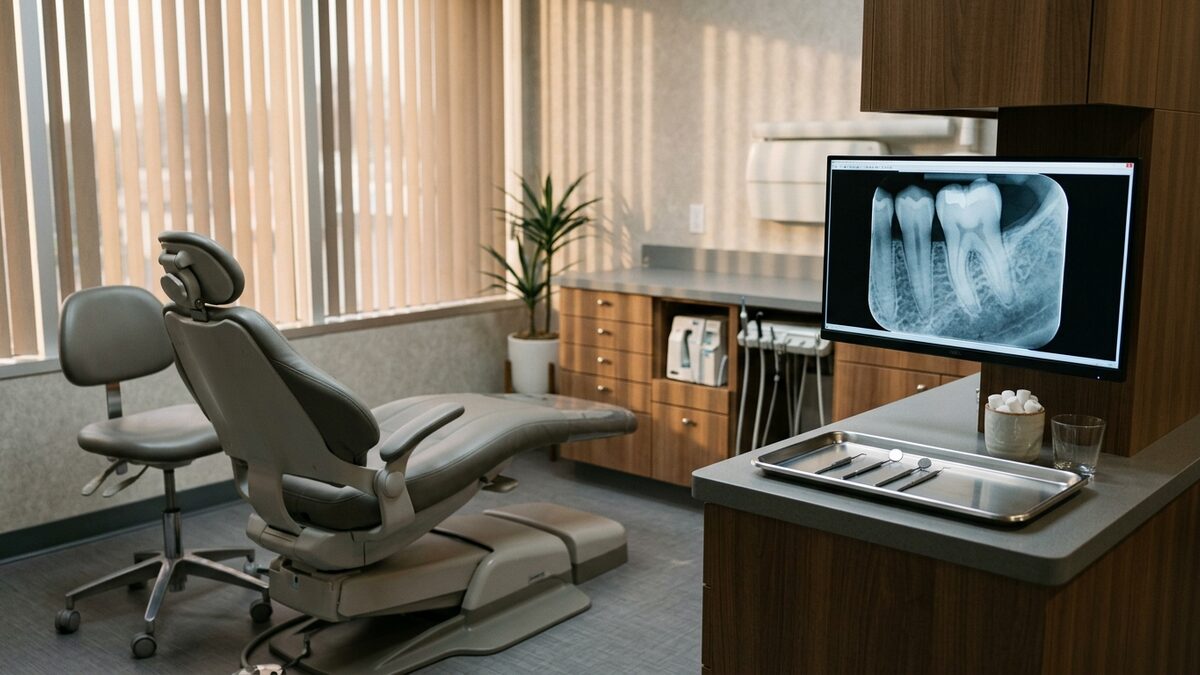
Most patients reach this crossroads after a diagnosis of deep decay, a fractured cusp, a failed prior restoration, or persistent infection at the root tip. Imaging, including a periapical radiograph and sometimes a cone-beam CT scan, helps the clinical team assess how much sound tooth structure remains above the gum line, whether the root itself is intact, and how much surrounding bone is available. These three factors (remaining structure, root integrity, and bone volume) largely determine which treatments are even feasible before a patient ever weighs preferences.
A root canal becomes the favored path when enough healthy tooth structure remains to support a crown and the root is not fractured below the bone level. The pulp tissue inside the tooth is removed, the canal system is cleaned and sealed, and the tooth is restored with a crown to protect it from future fracture. The natural root stays in place, preserving the periodontal ligament and the proprioceptive feedback that helps a patient sense bite force on that tooth.
Extraction with implant placement is typically considered when a tooth is no longer restorable: when a crack extends below the bone, when so little structure remains that a crown cannot be reliably retained, or when a previous root canal has failed and retreatment is unlikely to resolve the infection. In these cases, removing the tooth and placing a titanium implant in the healed socket allows a crown to be supported by the implant rather than by a compromised natural tooth.
Some clinical scenarios point clearly toward one path. A patient with a single deep cavity and otherwise intact tooth structure is generally a strong candidate for endodontic therapy. A patient with a vertical root fracture, by contrast, cannot retain that tooth regardless of how skilled the procedure; extraction is the only path forward. Most cases sit somewhere in between, and the clinical team weighs several variables together rather than reaching for a default.
Timelines, longevity, and cost considerations
Treatment duration differs meaningfully between the two paths. A root canal typically takes one to two visits over a few weeks, followed by a separate crown placement appointment. Most patients return to normal function within days of the procedure itself. An implant pathway is longer: the extraction site usually heals for two to four months before the implant is placed, the implant then integrates with bone for another three to six months, and a crown is fabricated and seated after integration is confirmed. Patients who need a tooth replaced quickly for visible or functional reasons often consider this timeline carefully, sometimes with a temporary restoration bridging the gap.
Longevity expectations are also relevant. A well-executed root canal with a properly fitted crown can serve a patient for many years, particularly when the tooth had substantial healthy structure to begin with. Implants, when integration is successful and home care is consistent, also demonstrate strong long-term survival in the published literature. Both options can fail, and both can require revision; neither is permanent in an absolute sense. The clinical team can discuss what published outcomes look like for a tooth in a similar condition to the one being evaluated.
Cost varies by region, insurance coverage, and case complexity, but the implant pathway is generally the larger financial commitment when considered in total, including the extraction, any necessary bone grafting, the implant fixture, the abutment, and the final crown. A root canal and crown often falls below that figure, though a tooth requiring retreatment, a post, and a crown can narrow the gap. Patients are encouraged to request itemized treatment plans for both options so the comparison stays concrete rather than abstract.
Other factors deserve attention. Patients with certain medical conditions, including poorly controlled diabetes or a history of head and neck radiation, may have specific implant considerations the clinical team will review carefully. Patients who smoke face elevated implant failure rates and are often counseled accordingly. Active periodontal disease usually needs to be stabilized before either path proceeds. Heavy nighttime clenching or grinding affects both restorations and may influence material selection and night guard recommendations.
In practice, the clinical team frames the conversation around what is preservable rather than around a single best answer. A natural tooth with a viable root and adequate structure is usually worth saving; a tooth that has lost too much to disease or trauma may be more reliably replaced. The patient's timeline, budget, and tolerance for multi-stage treatment all factor into the final plan, and second opinions are welcomed when the choice feels unclear.
This article is informational and is not medical advice. Treatment decisions should always be made in consultation with a qualified dentist or endodontist who has reviewed the patient's specific case.