
Teeth Whitening Options, Compared Honestly
In-office bleaching, take-home trays, and over-the-counter strips each do different things at different price points. Here is a clear-eyed comparison so you can choose the right approach for your situation.
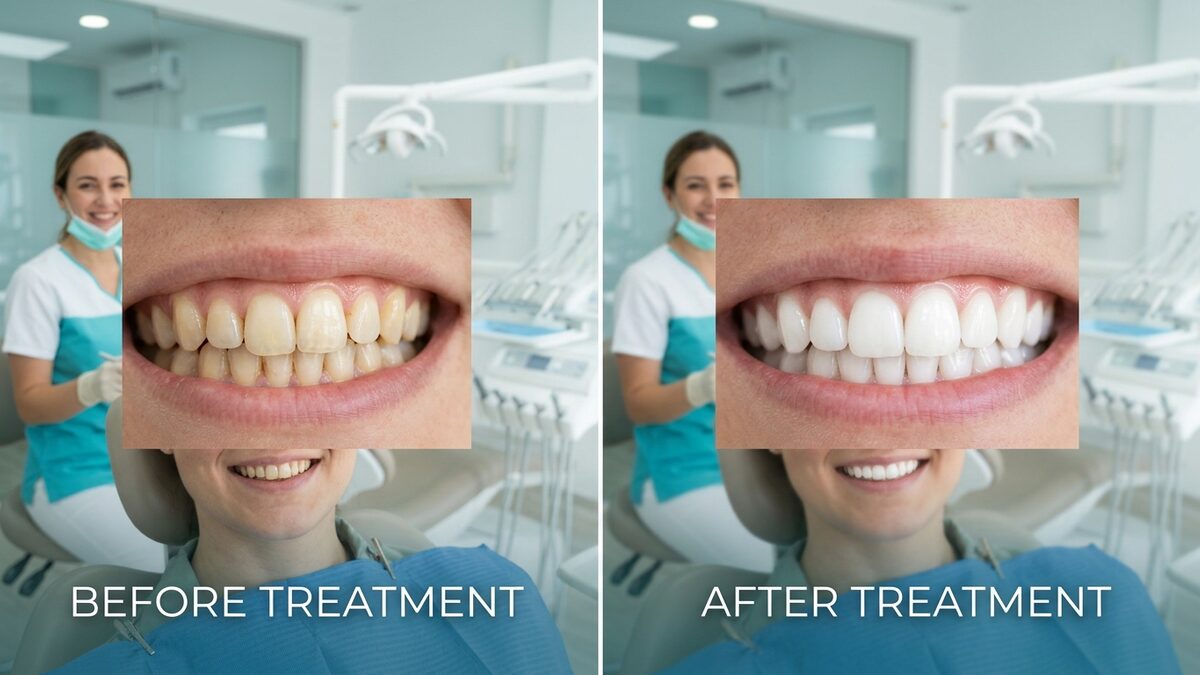
Why whitening results vary so much between people
Tooth color is partly structural and partly surface-based. Structural discoloration — yellowing baked into the dentin layer from aging, certain antibiotics, or fluorosis — responds less predictably to bleaching than surface staining from coffee, tea, wine, or tobacco. Before investing in any whitening method, it helps to know which type of discoloration you are dealing with.
Teeth that are heavily stained from lifestyle sources (coffee every day for years) typically respond well. Teeth discolored by tetracycline antibiotics taken during childhood tend to whiten partially but unevenly, and often require more sessions than the packaging suggests. Dental restorations — crowns, veneers, bonding — do not bleach at all; bleaching only changes the color of natural enamel.
In-office bleaching: the fastest path to the biggest change
Professional in-office whitening (often branded as Zoom, Opalescence Boost, or similar) uses a higher-concentration hydrogen peroxide gel — typically 25–40% — applied directly to the teeth under strict isolation to protect the gums. The process takes about 60–90 minutes and can lighten teeth by six to ten shades in a single appointment.
The advantages are immediacy and control. A dentist can monitor the process in real time and stop early if sensitivity occurs. The disadvantages are cost (typically $400–$800 at a dental office in the Los Angeles area) and the fact that results are not permanent — teeth will gradually re-stain over months to years depending on diet and habits.
Important: In-office whitening should only be done after a dental examination. Untreated decay or gum disease can make bleaching painful and, in the case of cavities, can allow the bleaching agent to reach the pulp. Whitening is an elective cosmetic procedure, not an emergency — sequence matters.
Custom take-home trays: the better long-term investment
Dentist-dispensed take-home whitening uses custom-fitted trays made from impressions of your teeth. The trays are filled with a 10–16% carbamide peroxide gel and worn for 30–60 minutes per day (or overnight, depending on concentration). Most patients see full results in two to four weeks.
The advantages over in-office treatment are cost (usually $150–$350 for the trays and initial gel supply) and control over pace and sensitivity. Patients can pause treatment when sensitivity spikes and resume when it subsides. The custom trays also last for years — when teeth start to re-stain, patients need only buy refill gel, not new trays.
This is the option most dentists — including Dr. Manesh — use themselves. The results are comparable to in-office treatment; they simply take longer to appear.
Over-the-counter strips and gels: fine for mild staining, limited otherwise
OTC whitening strips (Crest Whitestrips, Colgate Optic White, and similar) use 5–10% hydrogen peroxide. They work — they are not a scam — but the lower concentration and universal-fit design limit how much change they can produce. Mild to moderate surface staining can lighten noticeably. Deep or structural discoloration typically does not respond significantly.
The practical comparison: a standard OTC strip course (two weeks at $40–$60 retail) will produce a visible but modest result. If that is your goal and your teeth are healthy, it is a reasonable starting point. If you want meaningful whitening for a specific event or a long-lasting result, professional options are more predictable.
Whitening toothpastes: abrasion, not bleaching
Most whitening toothpastes do not contain bleaching agents in meaningful concentrations. They work primarily through mild abrasives that polish away surface deposits. Some newer formulations contain low-dose hydrogen peroxide or blue covarine dye, which creates an optical whitening effect rather than a chemical one. These products are better than nothing for maintenance, but they will not whiten teeth that are already noticeably stained.
Sensitivity: what to expect and how to manage it
Temporary sensitivity is the most common side effect of all bleaching methods. It usually presents as a sharp, shooting sensation in response to cold air or cold liquids — sometimes called "zingers." It is not harmful and typically resolves within 24–48 hours after stopping treatment.
Managing sensitivity: use a potassium nitrate toothpaste (Sensodyne, for example) for two weeks before starting treatment. Apply it in the whitening tray itself if using custom trays — pressing it against the teeth for 10–15 minutes helps desensitize the pulp. Reduce treatment frequency rather than stopping entirely if sensitivity is mild. If sensitivity is severe or persists after stopping, schedule a dental exam; it may indicate an underlying issue unrelated to whitening.
The honest summary
For mild maintenance: OTC strips are fine. For meaningful whitening with good long-term value: custom take-home trays from your dentist. For a fast result before an event: in-office bleaching. For any whitening method, a dental examination first is the right sequence — both to confirm your teeth are healthy enough and to confirm whitening is the right treatment for the type of discoloration you have.
This article is for general informational purposes only and does not constitute dental or medical advice. Consult a licensed dentist before beginning any whitening treatment, particularly if you have restorations, dental sensitivity, or untreated oral health conditions.