
Wisdom Teeth Removal: When It's Necessary and When It's Not
Wisdom teeth, the third molars that typically emerge between ages 17 and 25, occupy an unusual place in dental care. For some patients, removal is straightforward and clearly indicated. For others, the teeth erupt without incident and function for decades. The decision rests on imaging, position, symptoms, and the health of adjacent teeth, not on a blanket assumption that every third molar must come out.
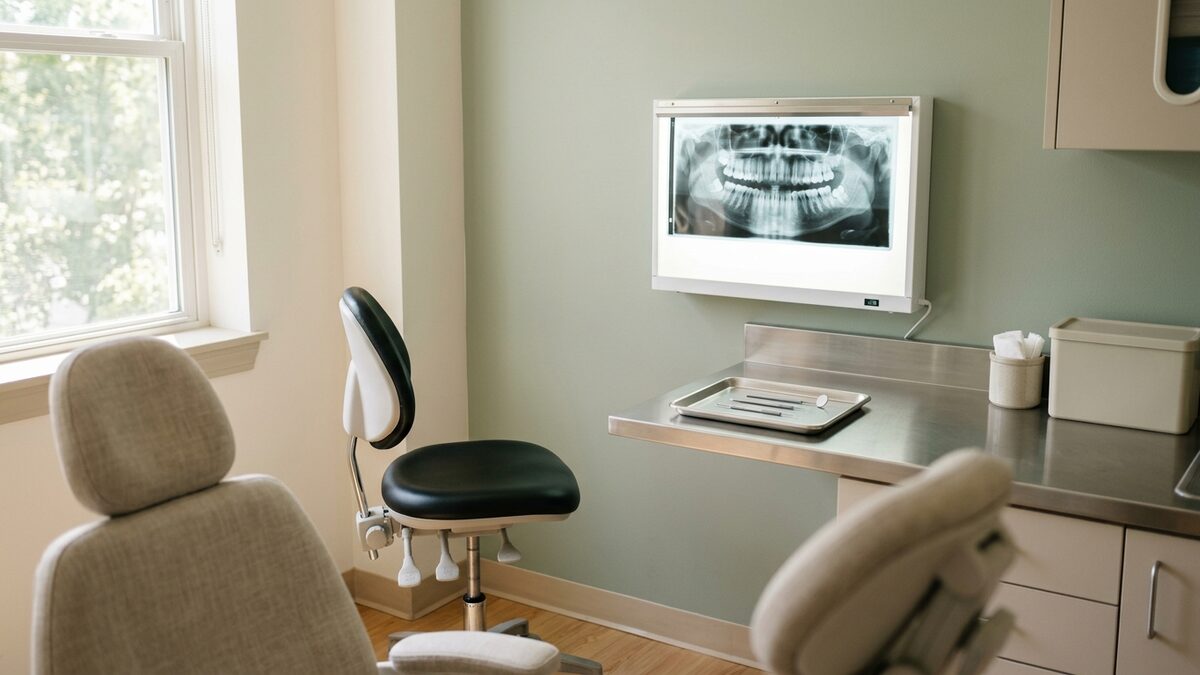
The conversation about wisdom teeth often arrives during a routine dental visit, usually after a panoramic radiograph reveals the position of the developing molars. From there, the clinical team weighs several factors: whether the teeth have room to erupt fully, the angle at which they are positioned, the condition of the second molars immediately in front of them, and whether the patient has experienced symptoms such as pain, swelling, or recurrent gum inflammation around a partially erupted tooth.
Impaction is the central concept. A wisdom tooth is impacted when it cannot fully erupt into a normal functional position, usually because of insufficient space, an unfavorable angle, or surrounding bone and soft tissue. Impactions fall into several patterns. A mesioangular impaction tilts the tooth forward toward the second molar. A distoangular impaction angles backward. A horizontal impaction lies sideways within the bone. A vertical impaction sits upright but may still be trapped beneath gum tissue. Each pattern carries different surgical considerations and different risk profiles for the adjacent tooth.
Several scenarios point toward extraction as the appropriate path. Recurrent pericoronitis, which is inflammation of the gum tissue overlying a partially erupted tooth, tends to return whenever bacteria collect under the flap of tissue. Untreatable decay in a third molar that cannot be reliably restored is another indication, particularly when the tooth's position makes routine cleaning impractical. Cysts or other pathology associated with an unerupted tooth, identified on imaging, generally warrant removal. Damage to the adjacent second molar, including resorption of its root or deep periodontal pockets between the two teeth, is a significant indication because the second molar is functionally more important and easier to preserve when the third molar is removed earlier rather than later. Orthodontic considerations occasionally enter the discussion, though current evidence does not support routine extraction solely to prevent late crowding of the front teeth.
Other situations favor monitoring rather than immediate intervention. A fully erupted wisdom tooth in good position, with a healthy opposing tooth and reasonable access for brushing and flossing, can often be retained and maintained like any other molar. A deeply impacted tooth that is fully covered by bone, asymptomatic, and not associated with cysts or adjacent-tooth damage may be left in place and watched with periodic radiographs, particularly in older adults for whom surgical risk increases. The decision in these cases is not passive neglect; it is active surveillance, with the understanding that circumstances can change.
How Age, Healing, and Imaging Shape the Recommendation
Age influences both the likelihood of complications during surgery and the speed of recovery. In patients in their late teens and early twenties, the roots of the third molars are often still developing, the surrounding bone is more elastic, and healing tends to be faster. As patients move into their thirties and beyond, the roots are typically fully formed, the bone is denser, and proximity to the inferior alveolar nerve in the lower jaw becomes a more deliberate consideration. None of this means that older adults cannot have wisdom teeth removed safely; it means that the risk-benefit calculation shifts, and the threshold for recommending elective removal generally rises with age.
Imaging is central to the evaluation. A panoramic radiograph provides a wide view of both jaws and is the standard starting point. When a lower wisdom tooth appears close to the inferior alveolar nerve canal, a cone-beam CT scan may be ordered to assess the three-dimensional relationship before surgery is planned. This step is not routine for every case; it is reserved for situations where the additional detail meaningfully changes the surgical approach or the conversation about potential nerve-related risk.
The consultation itself is typically a structured conversation. The clinical team reviews the imaging, examines the mouth, discusses any symptoms the patient has experienced, and walks through the options. When extraction is recommended, the discussion covers what the procedure involves, the type of anesthesia or sedation that may be appropriate, expected recovery timelines, and the specific risks for that patient's anatomy. When monitoring is the appropriate path, the conversation covers what changes would prompt revisiting the decision and how often follow-up imaging is reasonable.
Recovery from third molar surgery varies with the complexity of the extraction. A fully erupted tooth removed in a straightforward fashion may produce only a few days of soft-tissue tenderness. A deeply impacted tooth requiring bone removal generally involves more swelling and a longer initial recovery, typically returning to baseline within one to two weeks for most patients. Postoperative instructions emphasize gentle oral hygiene, avoidance of suction and smoking that can disturb the clot, and a soft diet during the initial healing window. Most patients describe the experience as more manageable than they anticipated, particularly when expectations are set clearly in advance.
The broader point is that wisdom teeth deserve an individualized assessment rather than a default response in either direction. A blanket policy of removing every third molar overtreats patients whose teeth would have functioned without issue, while a blanket policy of leaving them alone undertreats patients whose impactions are quietly damaging adjacent teeth or harboring pathology. The clinical team's role is to read the imaging, listen to the patient, and recommend the path that fits the specific situation rather than the average one.
This article is informational and is not medical advice. Treatment options for wisdom teeth and any oral surgery should always be discussed with a qualified dental professional who can evaluate the individual situation.